Showing posts with label Peer Mentoring. Show all posts

Tuesday, 15 October 2013

'We are like a family, we look out for one another and work as a team, helping others have a voice'

Gail Bland
14/10/2013


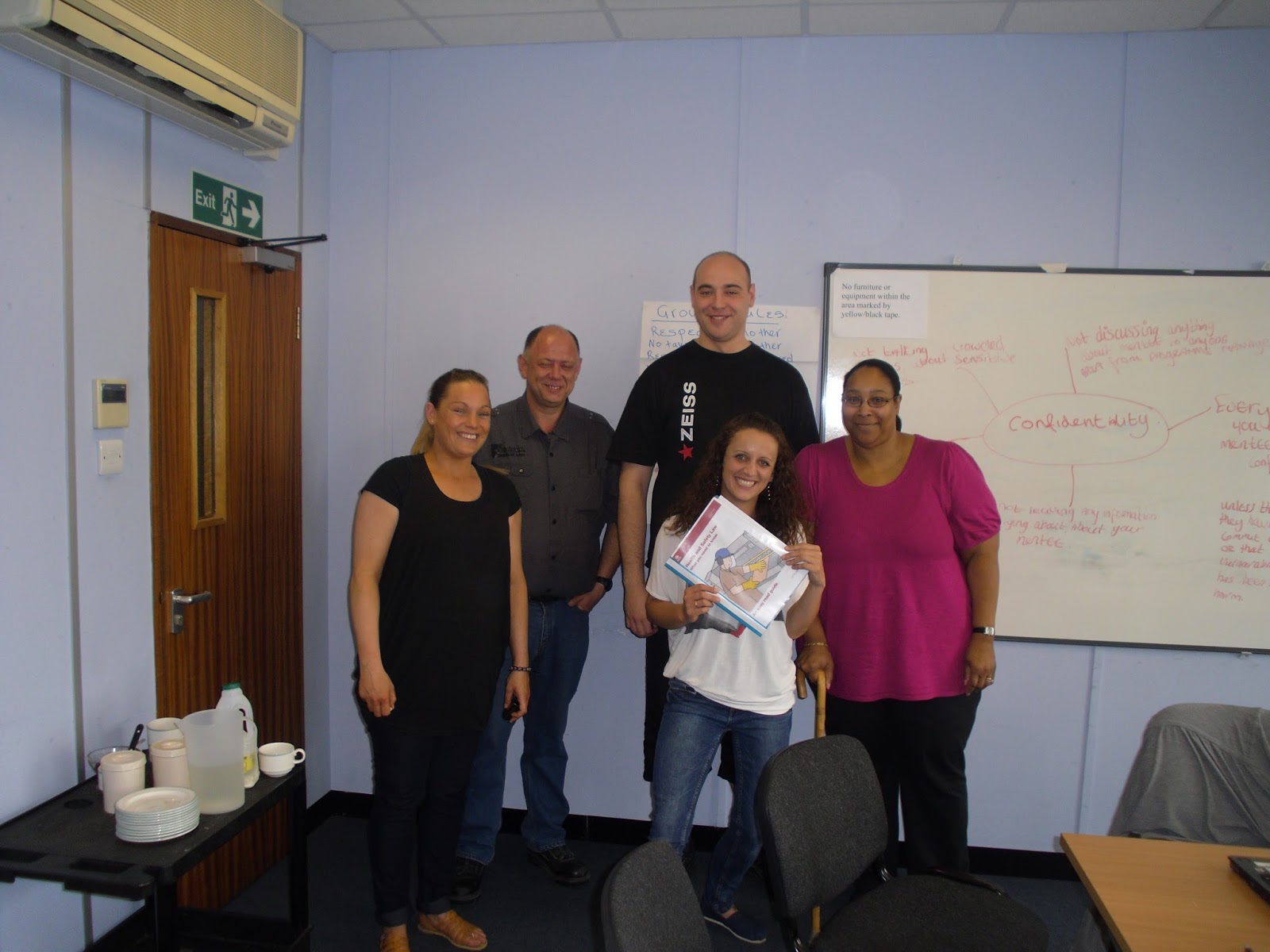
My name is Gail, I am an ex-offender and I have worked for User Voice since January 2012 as a Programme Manager setting up and developing a service user council within probation. Also, I deliver a peer mentoring accredited training programme to service users who will then mentor other service users.

Employment for people with criminal records is very difficult especially in today’s current economic climate.  Employers seem to shy away from employing ex-offenders, very often their CV’s go straight in the bin; they don’t seem to be able to look beyond the offence.

I committed a crime 12 years ago and received a 12 month sentence suspended for 2 years.  My experience of probation back then was not a very good one, there was help available but the organisations giving this help and support only seemed interested in ticking a box to say that they had worked with an ex-offender, they often classed a conversation as support.  I often think what if User Voice had been around 10 years ago, personally I wish it had.  I have seen a change in probation's attitudes towards service users.

I was fortunate that I was able to keep my job after being given my sentence, my problems started when this organisation went into administration.  I was out of work for 2 years, applying for all sorts of jobs, the rejection was terrible, this left me feeling depressed and worthless.  When I did get an interview they focused on my offence, and then I heard nothing from them.

I was given a break by an old work colleague who knew all about my offence, this made me feel great again; it was with a charity that trained and gave work placements to ex-offenders and those coming to the end of their prison sentences.  At last a job to help others in a similar position, or so I thought.  Some members of staff gave me a hard time, they went to the board asking that I be finished as I had a criminal record how ironic when these were people supposedly helping offenders and ex-offenders, they did not get their way.  I will never ever forget that experience and don’t want to see others experience it.  I stuck it out and I left when I wanted to leave I did not let them force me out.


I am really privileged and honoured to work for User Voice, the staff all have a vast amount of experience, knowledge and passion and the one thing that really sticks out for me is nobody judges you, we are like a family we look out for one another and work as a team, helping others have a voice.  I love my job, and the service users I work with are fantastic, it's great to see them gaining confidence and belief and becoming stronger each day.  

Monday, 19 August 2013

Rehabilitation and Santa Claus; what's the difference?

Zoe Kennerson
19/8/2013

One is a social concept constructed on the understanding that hard work and behavioural change can reap benefit and reward, however is dismissed by many who doubt evidence of its existence…..the other is a fictional character created to encourage compliance.
So do we believe in rehabilitation?  Do we believe in change?

As an ex-offender and an ex-addict I believe! I believe that I am evidence that people can change, and that not only does rehabilitation exist, it is possible.

I began working for User Voice in October 2012 as a Programme Manager on a Peer Mentoring Project. It was during this work that I began to wonder if others shared my belief and recognised the potential in people and the power of change.

Criminal Justice Services seek not only to punish people who break the law, but to aid rehabilitation and support change. Surely for this to be achieved we need to believe it is possible?

So is rehabilitation real or just another myth like Santa Claus?

We often hear people talk about change, reform, desistance and rehabilitation. We see services strive to achieve and sell the benefits of reform. But do they really believe in it, that it truly exists?

Mum’s, Dads, Grandparents, Aunties and Uncles all tell their young children about Santa. “Be good” they say, “Santa is watching!”   They spend lots of money on presents (to hide and pretend Santa delivered) and they prepare for his arrival on Christmas Eve. Like those trying to support people to rehabilitate, a lot of effort and energy is put into Santa, all the right things are said and done, but his actual existence is still dis-believed. A whimsy for children who know no better!

So how do we make people believe? Not just say they believe, but actually believe! We show them. We show them that not only does it exist, it works!!!

Through my work at User Voice I have been lucky enough to meet lots of rehabilitated “ex-offenders” who have made changes to their lives and are committed to helping others to do the same. My role includes training and supporting peer mentors to provide a service to people in the Criminal Justice System. I see rehabilitated people on a daily basis and my observations tell me that rehabilitation is real! I am fortunate enough to be in a position that enables me to see past the statistics.

The people I work with are evidence of change, the living proof! Not only have they been successful in not re-offending, but they offer hope and inspiration to others who wish to change.

It is human nature that if you are going to try something new (always a daunting prospect when hard work is involved), you look to others who have already done it, to give you some advice and guidance. Surely it makes sense that this opportunity should be available for those looking to stop offending.  Having a peer mentor who has rehabilitated and understands the dynamics of change can be so beneficial for marginalised individuals who want to change. I work with peer mentors who on a daily basis make a conscious decision to live their lives in a different way. These people are thoughtful, insightful, reflective, self-aware, sharing and hard working.

Peer mentoring is a powerful service that contributes towards the reduction of reoffending by providing an opportunity for people to share their own experiences and support others who are in situations they have experienced.

Peer mentoring in criminal justice services is the evidence base that change and rehabilitation are possible.

Of paramount importance, peer mentoring is about belief.  I like my colleagues at User Voice and the team of peer mentors I support, all believe in rehabilitation. We believe it, because we have lived it!   And we believe that the people we work with can achieve it too….… 


Monday, 22 July 2013

I wanted to work with young people to allow them to make positive choices which will help them in life


Mifta Choudhury
22/07/2013

I joined User Voice almost 11 months ago working on the Youth Programmes. I deliver the Youth Councils and Advisory Group projects across London and also support staff on the adult community side with Peer Mentoring.

User Voice is unique because of the staff who work here and the holistic support it gives to service users.

I spent the best part of my life in prison. One of the things that I saw was that people kept coming back; I saw people who got out of prison after being inside for two or three years and down the line I would bump into them again, I would think to myself why have they come back into prison?

When we had a catch up and a chat I would ask them about why they were back in prison and they would tell me that they had no help or support outside once they had left jail, they were back on streets doing what they had to do to survive… I remember the same people saying to me, I’m not coming back to jail! In the end it was thanks to those people that I decided to get an education while I was in prison.

I decided that I wanted to work with young people to help them, to support and guide them and allow them to make positive choice’s which will help them in life.  It’s not my job to impose my values or beliefs on the young people I work with, but I use my learning experiences to inspire these young people onto a better future.

I find that the young people I work with at User Voice are innovative, resilient and passionate about making change, once you get to know them!  They see you for who you are and once you have built the relationship with them you get to see this passion and drive. We have some great conversations and other times we have a really good laugh!

The young people I've been working with are now the leaders of their Youth Council/Advisory Groups, and now being accredited as Peer Mentors. They have learned to manage and balance their life to extent where they now turn up for meetings on time and can commit themselves to helping to change local services and the community and look at life in a different way. 

I don’t think this is just down to me; it is by the young people learning, adapting and by having absolute consistency from User Voice staff who provide a holistic, caring approach to working with these young people.

Monday, 8 July 2013

I feel the warmth of peer support; these people know my journey and I know theirs.

Paula Harriott
8/07/2013

Between 2004 and 2008 I was a prisoner, serving the majority of my sentence at HMP Drake Hall in Staffordshire, a semi open prison holding around 400 women. I arrived there desolate and angry; missing my five children, and facing long, sad, frustrating, agonising days and nights as I came to terms with the eight year sentence.  Prison for women is like going back to junior school….yes miss, no miss, can I go to the toilet miss….it doesn't do much for your self esteem or self confidence for sure as you soak up the atmosphere of control and correction.

Last month I returned to HMP Drake Hall, not on recall, but working as Head of Programmes for User Voice. I walked around the prison, revisiting memories and my main focus was on a small blue hut in the centre of the prison, called the Signpost. In many ways my journey to User Voice started there in that little blue hut with no heating in the winter (freezing). But what it signified to me and to all my peers was a refuge from the authority of the prison. The Signpost was the first peer support project at Drake Hall. Two prisoners (one of them me) escaped the drudgery of cleaning and kitchens to sit in that hut, unsupervised by staff, and support other women to access education courses, fill in complaints, read their mail, get information about how best to survive in prison and generally just be a welcoming space for those that needed a bit of humanity in the midst of the institutional coldness that is prison. In the Signpost we made tea, talked like free people and generally gave each other support to get through the drama and tension that is prison. 

In two years the number of women undertaking distance learning courses rose to over 60, a first at that prison, and the number of complaints also rose dramatically. At that time complaining was the only option by which to exercise voice; there was no prison council. The Governor soon recognised that the Signpost was a hub of information regarding what was going on in the prison and would often pop in for a cup of tea and a chat about issues, seeking to understand the mood of the prison and using myself and the other peer supporters as a barometer to test out new ideas, proposed changes and generally find out how his staff were doing. He was willing to listen to both good and bad. (I have visited that Governor too, now managing a large male prison, in my capacity as Head of Programmes at User Voice.) Without knowing it I was developing and practising the skills needed in the co-production methodology that underpins the work of User Voice.

So in the Signpost I learnt the value of peer support and how it can benefit prisoners. How it can contribute to a better experience of prison, how it can offer support to those who have only ever been exposed to pain and brutality outside; mirrored in the prison regime, life feels no different to the norm. The informal talking and motivation to look forward, the modelling of compassionate non-judgmentalism to all those who came through the door of the Signpost was a stark contrast to the cultural norm of the institution. It was peer support that got me through my prison sentence, that helped me to understand myself better and challenged me the deepest, because I was not paralysed by fear when communicating; I was keenly aware of the power the prison staff had over my life and did not ever trust the hand they offered along the way. They offered control and surveillance, not motivation nor hope in change.

I came to User Voice, still in pain and anguish caused by that prison sentence, but here at User Voice I have once again found the refuge of the Signpost; a space to be me, to own my failings, to acknowledge my strengths and celebrate my successes. Working in an organisation, staffed by 80% ex-offenders, I feel the warmth of peer support; these people know my journey and I know theirs, not from a book but from personal experience. It’s a pain that binds and in the unity we have strength, build resilience and find freedom.